

the modern salon
dinners, debates, and djs, the modern salon is everywhere and it's how we plan on being young forever


The Guest List is Partiful’s newsletter exploring the social world we help facilitate. Today’s post was written by Eve Morgan.
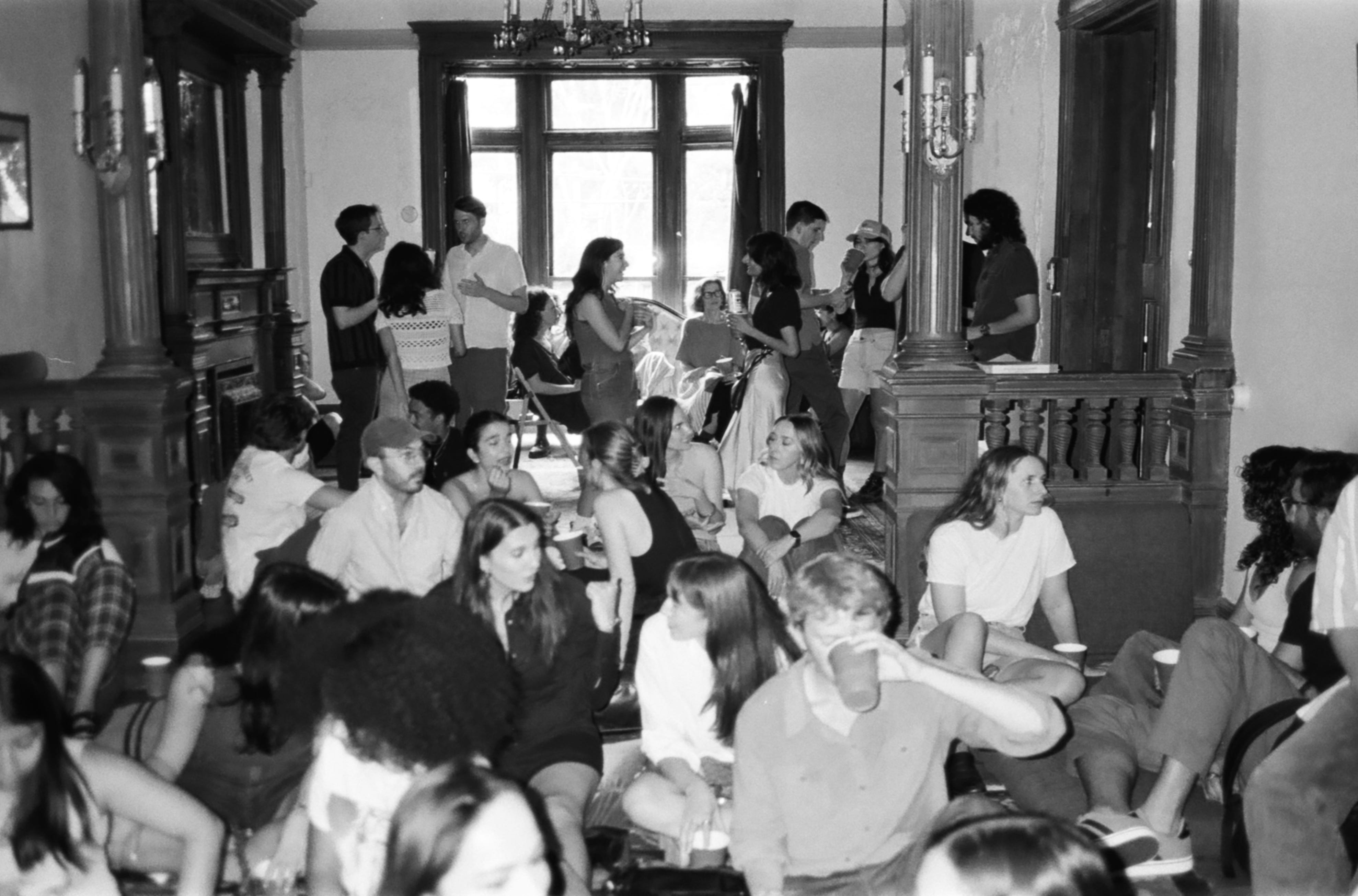
“Do you think I can wear this to the reading and the club?” I ask my flatmate, who hovers in her bedroom doorway observing my frantic fashion show.
The plight of the modern woman: how to find your way into every room, whilst looking like you belong there. Literary and nightlife circles may have a lot of overlap, but there’s still a distinct cavern between the two when it comes to dress code. Once you’ve nailed the accessories, that’s half the battle won- think big chunky rings and bangles, a messy updo. I’m hardly above a quick change, and have been known to tie a second top like a bow to the strap of my bag to swap into. Shoes are the most burdensome part of this quandary; I once strutted 10km back and forth between a reading in Soho and its afters in a delicious pair of snakeskin kitten heels, leaving my feet bleeding and numb for three days. I can’t say I regret it.
Of course, it’s about the words, not the aesthetic. Or whatever. I could show up at these things in whatever falls out of my overflowing wardrobe first, whether it’s something I’d be proud to be caught in the back of promo pics or not. But I don’t think an event is only the hours it officially lasts. Both the foreplay and afterglow are just as important as the thing itself. And that means fussing delightedly over the outfit, like the protagonists in the films I’d fawn over a child, with clothes strewn across my room, half- smirking beneath the faux-despair.
Later, the bouncer at this particular reading will tell me I “look beautiful- like a professor.” Exactly what I was going for, I tell him, though I’m not sure a miniskirt would fly in a seminar. When I finally crash into bed- after the reading, after the club- the sun is up, and I’m pleasantly, utterly satiated.
*
One of the key principles of the original salon is that you cannot simply learn by having facts and theories shared with you; you have to engage with your own ideas and their interaction with those of your peers. You have to feel their slip and curve and give like clay. This is what I’m doing when I meet the gaze of a friend as we listen to a reading, almost imperceptibly widening my eyes to communicate that I, too, hear how terrible it is, or when we pass the illicit bottle of cheap white wine back and forth in the corner, debating whether we should stay beyond the interval (the answer is always yes). This is what I’m doing when we catch up in the gaps between performances: talk politics, talk dating lives, talk about what we’re writing, talk about our dreams. This is what I’m doing when I hold my breath and close my eyes as though, if I’m still enough, I can absorb someone’s genius through the air we’re both breathing.
Roman poet Horace’s view of poetry was that it should aim “either to please or to educate”- and the salon grew in the space between those two impulses. Since women weren’t permitted into formal education, their homes instead became alternative classrooms, parlours turned into laboratories for ideas, pulling people in to talk philosophy, literature, science, and whatever was most hotly argued that week. In 18th-century France and London, hostesses like Catherine de Vivonne and Elizabeth Montagu helped drive the Enlightenment from their drawing rooms. In the US, salons hosted by A’Lelia Walker and Georgia Douglas Johnson helped power the Harlem Renaissance, keeping writers like Langston Hughes and W.E.B. Du Bois inspired. For nearly thirty years, Louise Bourgeois ran notoriously brutal Sunday salons in her New York townhouse, offering criticism that was harsh, welcome, and often both at once. And now, as the 21st century blooms, salons have slipped out of their old form and into something new. What started in privacy, in parlours and studios, has migrated to dinners, readings, afters, and even group chats. The modern salon has returned everywhere, and more exciting than ever.
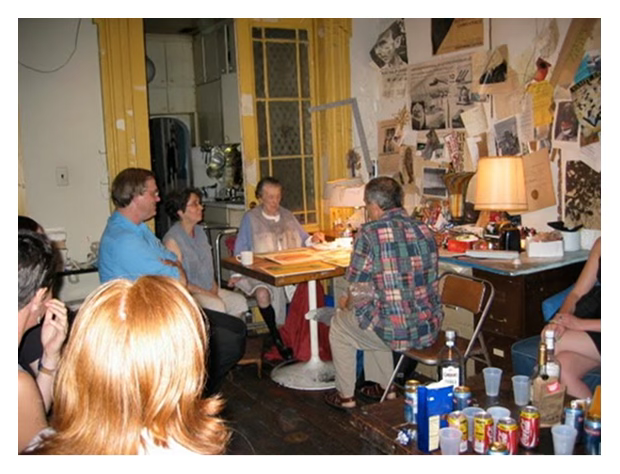
The modern iteration of these gatherings is more often a public event than a private one, heavier on the performance aspect than on the structured, facilitated discussion. Literary events and readings are the most obvious form of this, or book clubs, magazine launches, informal lectures on the nichest of topics. You could even stretch the definition to the starchiest of private views and listening parties, if you cared to.
Over the past couple of years, the club has been intellectualised on every corner of the internet. Clubbing as praxis, the soft skills of a party girl, the dancefloor is innately political. I often wonder if more time goes into the analysis than the dancing, but I’ve put in my fair share of sweating in clammy basements, so I hope I’ve earned the right to ask: could the club be a form of salon? And if so, what can’t be? If modernity is about remaking the old with fewer rules, then I want to take the skeleton out of this definition. The salon was designed “either to please or to educate”, and every time I’ve stepped into the throng with a heavy bass behind me, I’ve experienced just that.
London in particular is teeming with modern salons, and the place this resurgence occupies seems clear to me. We all want to experience new things, we want to get out of our homes, to give our energy to something that takes attention, and critically appraise it. We want to be surrounded by people who have a similar thirst for stimulation, intellectual and otherwise, in the hopes of building some kind of collective effervescence, or, failing that, getting tipsy on a weekday. Through this shared desire, the modern salon is built, with its disciples gathering around microphones passed back and forth, below pulsing decks, and between orders at the bar.
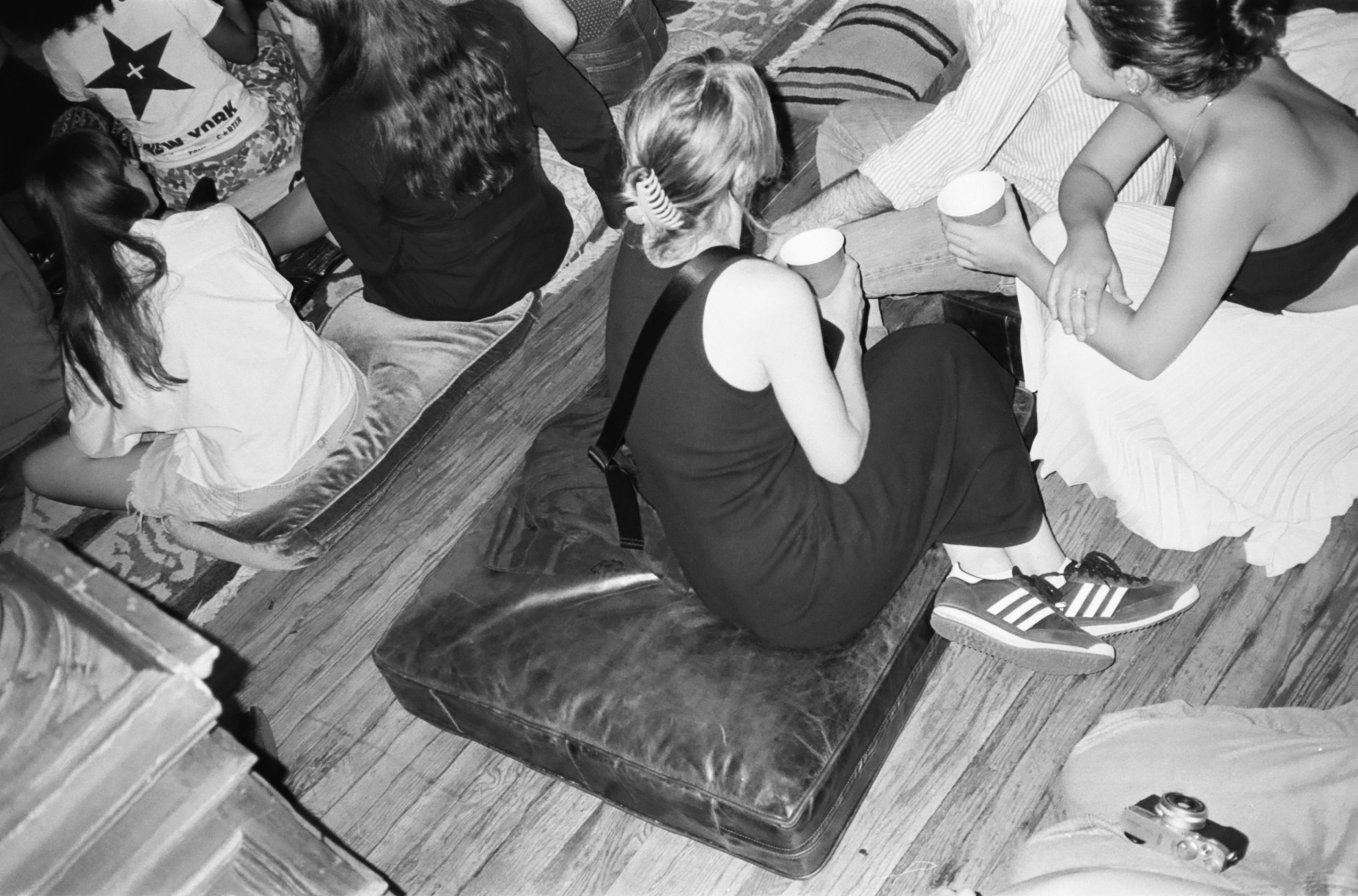
When I decided to start running COY Collective, my own reading series, last year, it was because I wanted to see a space where people who wouldn’t otherwise have a space to read could do so. After each reader shares, I interview them about the piece’s themes and their writing process to demystify the artist identity. This is partly selfish (I’ve never met a brain I didn’t want to pick), and partly connective. I’ve found that it can be the difference between admiration and inspiration. Art begets art, ideas beget ideas, and this is how we plan on being young forever.
The best kind of reading, to me, isn’t one where the audience listen, agape, to their superiors. It’s one where the conversations are curated to inspire further conversation and creation, on that very night and beyond. A modern salon functions as a response to the fact that information and art are simultaneously more accessible than ever, and less cohesive. The question of who is setting the curriculum and disseminating knowledge, as well as how and why, has led to a space where community-led and collaborative information sharing dominates rather than the more top-down practices of historical salons. We learn from one another, from proximity, from exposure, like a child learns language. At times, there’s more gossip than there is art; such is the scene. Catch-ups develop a new category- relationships, jobs, and literary drama. In just five pubs and bars across the city, a movement unfurls itself, entirely aware that it’s a movement. Perhaps this is to its detriment. Then again, the moment where a collective, dissipated as this one may be, recognises a hum of potential in between their exchanges is always my favourite chapter of a memoir.
In 1971, after reading her work aloud in New York for the first time, writer Kathy Acker wrote to a friend,
I decided I wasn’t a poet unless I read my stuff publicly aloud so Lenny & I went to St. Marks last night the open shit and it was very beautiful I feel all religious all these women were coming up to me afterward and saying your stuff was really great it really moved me so I’m feeling terrific…
In her diary, Acker added,
to make this poem not only my blood but my work I have to angelicly constantly publicly read this aloud publish it make myself known and heard
I repeat this to myself like a mantra. angelicly constantly publicly. angelicly constantly publicly. make myself known and heard. It’s all about immersion. Giving and receiving not as two separate processes, but as one constant exchange, where mapping the direction isn’t as important as momentum. Listening as an act of submission, understanding as an act of love, sharing as an exercise in nakedness.
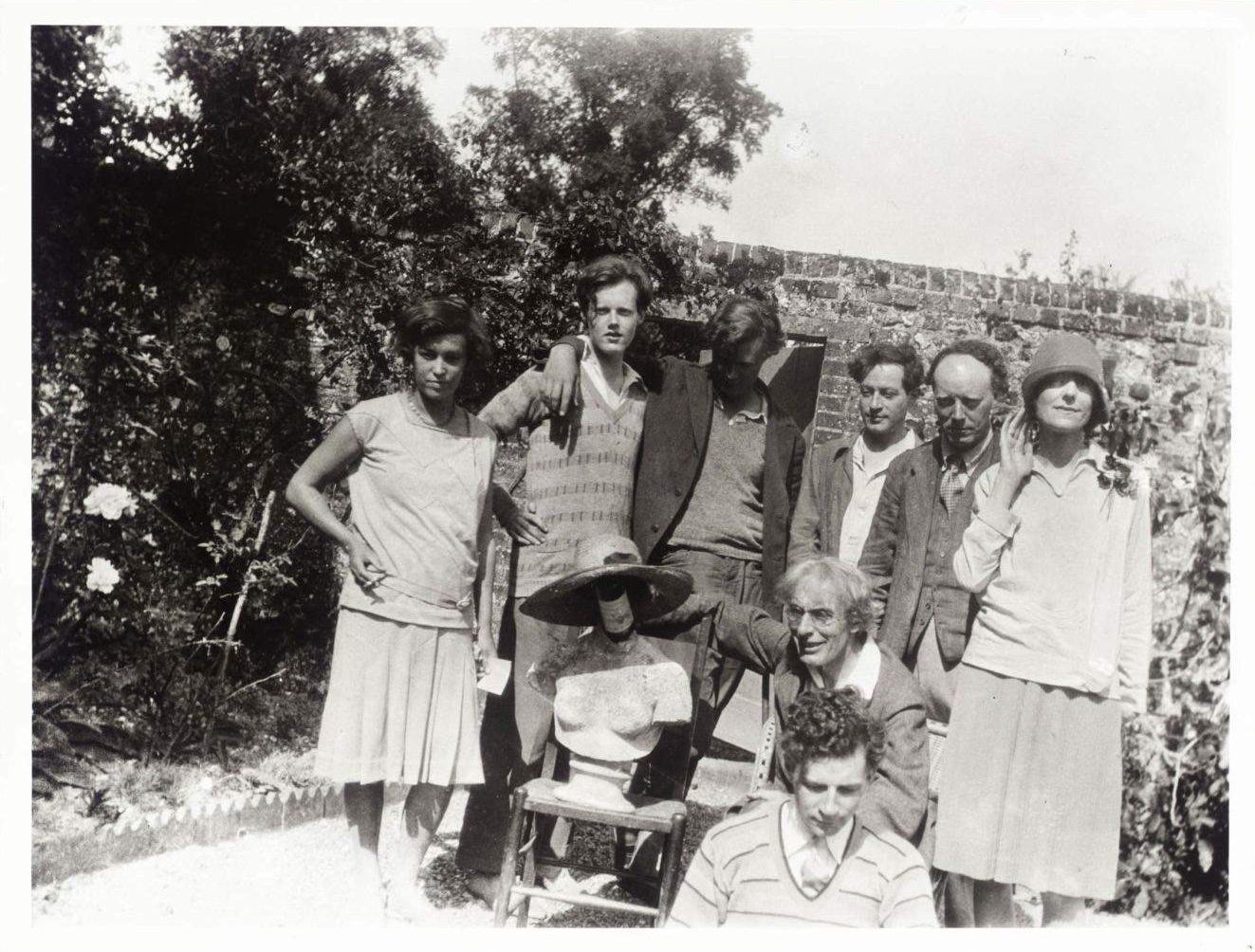
Traditionally, the salon is both a response to exclusionary practices and exclusive in itself. Modernity has a habit of opposing tradition, except when it doesn’t. The salons held where the Bloomsbury Group debated art, politics, and sexual liberation aimed to emulate their Cambridge education. The literary scene in London remains overwhelmingly white and middle-class or straight-up elite. Some hosts still introduce every reader with the details of their familial relationship, the history of their friendship, the place they went to university together, not even attempting to hide how little they look outside their own bubble.
I believe that, much like intellectual stimulation, artistic identities are collective. This means that for other people to see you as a writer and reinforce this can sometimes be the difference between betting on yourself or abandoning your craft. In a creative space that maintains foundations of exclusion, this is a vital purpose of the modern-day salon. It becomes a way for you to create yourself.
What I’m trying to convey is the blending and dissolving of party structures. The way we historicize salons suggests them to have been a pure pursuit of cerebral expansion that makes our clout-seeking fashion shows appear like somewhat shallow imitations. I can’t agree because of my fundamental belief that anything can be a party. Should be, even. Every reading is also a knees up, every DJ set is a point of discussion, every grassroots gig a site of development for a scene that goes beyond a single instrument, or poem, or promoter. And if my definition of salon- multidisciplinary, fun, and for those who weren’t handed the keys to the art scene at birth- cheapens the concept, then let it be cheapened.
 | A guest post by
|